Thursday, 3 March 2022

Outrageous Excuses 18


And rotten reasons why "We can't possibly do that because...".

Shame on Dominic Raab for suggesting that a more generous refugee policy for #Ukraine would “undermine” public support for refugees. (@CarolineLucas)

DONATE TO THE RED CROSS UKRAINE APPEAL HERE

“Russia does not want war,”
 says President Putin on 15 Feb. 2022 as he masses tanks on the Ukrainian border. Also “We just want to help the Ukrainians.”

The adoption of black and working-class “y’all” by upper-class Americans, and Brits, is “an attempt to disassociate from actual privilege”, says someone who says hearing it is like “biting on tinfoil”. She adds: "There are so many people who want to decorate themselves with fragments of other people's identities to make themselves appear other than what they are because they essentially don't like how the world perceives the people that they are. Sadly.” She started off with “It’s like holding up a sign saying ‘I’m an inauthentic, personality impoverished, patronising idiot.’” What do youse guys think?

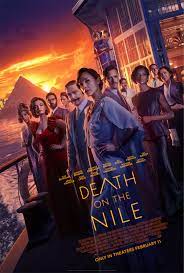
The most atrocious Agatha Christie adaptation can be excused with “It’ll bring new readers to the author”. What they mean is “We can sell more books”. See “Perhaps nobody saw anything at Fatima, but it increased people’s faith and brought many back to the church”. Also “Perhaps nobody was cured at Lourdes…”

Brandon Lewis, former Tory housing minister, advised against including mandatory sprinklers in building regulations because it would "discourage house-building". Brandon Lewis admitted automatic sprinklers save lives, but said it was not the government's responsibility to encourage developers to fit them... Lewis admitted automatic sprinklers save lives, but said it was not the government's responsibility to encourage developers to fit them. (Daily Mirror)

Silly reasons for not providing single-sex toilets: We have to build gender-neutral toilets in all new schools in Inverness because building separate toilets would cost too much. Girls cope by not eating, drinking or using the toilets all day. (Likewise single-user cubicles anywhere would “cost too much”. I don’t know how past ages coped.)

Silly reasons not to get married: Marriage — and heterosexual marriage, certainly — is not a feminist act. Full stop. (salon.com) Why? Because it’s “an institution in whose original incarnation women were just part of a property arrangement that also involved farm animals.” In its original incarnation – yes, it has changed since then.

We should stop Covid testing because:
 the tests aren't 100% reliable, they're plastic and get thrown in landfill, they've been used to control us, they make people more afraid and anxious – and isn't that going to make them ill?

We can't give women the vote because: Her nature is too delicate to brave the fierce storms of public life. Woman is the power behind the throne. Unseen, she rules the destinies of men and nations. Her influence is the barometer of civilization. (Rabbi Kaufmann Kohler, 1888)

Women can't compete in the Olympics because: An Olympiad with females would be impractical, uninteresting, unaesthetic and improper. (Pierre de Coubertin)


There were many liberal voters who felt that Hillary Clinton and the Democratic party needed to be punished for not being progressive enough to embrace Bernie Sanders. These dissatisfied people either refused to vote, voted for a third party candidate, or even grabbed the third rail and voted for Trump. They felt the people of America deserved to have Trump. (Jeffrey Keeten on Goodreads)

Man in the early times was almost naked, and as his intellect evolved he started wearing clothes. What I am today and what I am wearing represents the highest level of thought and civilisation that man has achieved. (Tawakkol Karman. She is wearing a hijab. I have nothing against hijabs – it's her reasoning I disapprobate.)

As [minority group X] we shouldn’t complain because it will be divisive. It will cause more problems. We will become too high-profile. It will distract from our message. The Catholic Church shouldn’t prosecute paedophiles because it will cause a scandal/bring the church into disrepute (too right). (See George Orwell on “playing into the hands of the fascists”.)

Trump-loving Republican Governor Kristi Noem, of the settler-state South Dakota, is attempting to ban Native history in public schools. Her argument is that teaching it sows divisiveness. (@LakotaMan1)

I'm told someone resigned from the Chorlton Labour party over Andrew Motion becoming Poet Laureate; Ken Loach left when Labour stopped collecting subs in person. What's the daftest reason someone has left the party in protest?  (@PolProfSteve)

Can’t remember the reason for the resignation but one of my colleagues was once told, by a comrade who read his mid-80s resignation letter, that he hadn’t actually resigned from the Labour Party so much as “expelled the rest of us for ideological deviation”. (@EquusontheBuses)

More here, and links to the rest.


Saturday, 19 February 2022

Perceptions of Agatha Christie: The Same Old Clichés

Not the Thames

There's a piece on Agatha Christie by Rhys Bowen on jungleredwriters.com called Those Golden Age Ladies Weren’t So Hot. I've read more than one book on Christie that claimed to rescue her from her detractors by “explaining” why she is “so bad”. (Her sometimes repetitive prose is a clever use of neuro-linguistic programming, and so witlessly on.)

This article tells us what a present-day writer expects from a mystery. For example: back story. Why doesn’t Poirot have one? Why isn’t he married? He has a tendresse for Vera Rossakoff and also for Zia Papopoulos, both shady ladies with an eye for a sparkling gem. They are also both well-upholstered and dark-haired. Poirot sometimes recalls the beauties of his youth, with their sweeping skirts, feather boas and huge hats. Why don’t modern girls make something of themselves? (See Third Girl.) Miss Marple sometimes refers to unsuitable young men who, instead of being forbidden the house, were constantly invited until their unsuitability became obvious. 

“Her characters are usually one-dimensional.” I can picture a two-dimensional character – a cardboard cut-out from a toy theatre – but a one-dimensional character would be what – a single point?

Bowen approves of The Hollow “which is a completely character-driven plot”. 

“The stories are always whodunnit and never whydunit. The crime writing field has moved into richer, more multilayered stories in which we are involved in the private lives and histories of the sleuth and the characters and their relationships.” This is the usual dissing of earlier writers in order to make current writers look good – the field has "evolved". 

She claims that Roger Ackroyd is unfair – the narrator withholds information. Of course he does. If he wrote "I stood behind Roger and inserted the antique dagger into the medulla oblongata via the foramen magnum because he was about to expose me as a blackmailer", there wouldn’t be a book.

“We have little sense of place in her books.” This is an oft-repeated slur. Christie herself once wrote that she preferred places to people because she was long-sighted and could see landscapes more clearly than faces. But she’s teasing us – she was clearly fascinated by people. Perhaps what Bowen means is that there are no long passages of lyrical description holding up the narrative. Surely “great writers” all write approvingly about nature?

“The village. The market town. The big country house. But that is about it.” And Mesopotamia, Baghdad, Egypt – you don’t even need to read beyond the titles to work out that not all her books are set in English villages, towns or country houses.

“We rarely know what plants are blooming, what birds are in the garden, what the air smells like, whether the scenery is wild and remote or soft and gentle.”

Despite Mrs Bantry and her seed catalogues? Nasse House and its rare shrubs? The foxgloves growing too near the sage? The clue of the exotic dahlia? Miss Marple's Japanese garden? The siskins and goldfinches Miss M pretends to be watching through her binoculars? What Christie doesn't do is employ the pathetic fallacy and ascribe human qualities like "gentleness" to a landscape.

“The books do not touch our emotions. Nobody weeps for the body in the library. Nobody is sad when the tormented murderer is apprehended. We remain detached observers to a crime and its solution.”

What goes through people’s minds when they dish up the usual clichés for the nth time – and try to convince us that they are the first to have the idea? 

Nobody weeps for the body in the library? Read the scene where the news is broken to the bereaved parents. Read about Clotilde Bradbury-Scott and her adopted daughter. The scene in Murder in Mesopotamia where the efficient Miss Johnson breaks down in bitter sobs. Nurse Amy Leatheran is later comforted by Poirot ("a woman couldn't have been kinder"). What does Bowen want, more melodrama?

And Peter Wimsey is “one-dimensional” despite the serious attacks of PTSD. See the scene in Strong Poison where he looks at himself in the mirror:

The great Venetian mirror over the fireplace showed him his own head and shoulders. He saw a fair, foolish face, with straw-coloured hair sleeked back; a monocle clinging incongruously under a ludicrously twitching brow; a chin shaved to perfection, hairless, epicene; a rather high collar, faultlessly starched, a tie elegantly knotted and matching in colour the handkerchief which peeped coyly from the breast-pocket of an expensive Savile-Row-tailored suit. He snatched up a heavy bronze from the mantelpiece—a beautiful thing, even as he snatched it, his fingers caressed the patina—and the impulse seized him to smash the mirror and smash the face—to break out into great animal howls and gestures.

Silly! One could not do that. The inherited inhibitions of twenty civilised centuries tied one hand and foot in bonds of ridicule. What if he did smash the mirror? Nothing would happen. Bunter would come in, unmoved and unsurprised, would sweep up the debris in a dust-pan, would prescribe a hot bath and massage. And next day a new mirror would be ordered, because people would come in and ask questions, and civilly regret the accidental damage to the old one. And Harriet Vane would still be hanged, just the same.

Bowen then confesses she has all Christie’s books and reads them for “comfort” and predictability. (There are Christie stories I find too disturbing to reread: Harlequin’s Lane, The Last Séance. I can’t even start And Then There Were None.)

A piece like this can’t end without tackling the central mystery: why did AC sell so many copies? Why is she more popular than current writers – than ME! “I suppose one of the reasons for her initial success is that there were not many other crime novels published when she started. Mystery was not established as a genre.” Whaaaaat? Christie took up the mystery genre because it was so popular in her day! 

“Then we had a very different crime writing wave in the US—the hardboiled guys, Chandler, Spillane and again spare telling of tales with little depth of characterization.”

You want depth? “You’re not human tonight, Marlowe!” Find me a deeper character, here suffering existential angst in The High Window. And if you want complex, try the chameleon Terry Lennox in The Long Goodbye.

But finally, it’s all about me – I mean, the current state of mystery writing:

“People who don’t read in our genre think of mystery novels as trite and slight because they only know of these initial writers. I have been asked if I ever intend to write a real book. But oh, how we have evolved. The best crime writing today can be called great literature. Complex characters, multiple timelines, incredible sense of place, nuanced feelings of right and wrong. What’s more, we have plots and climaxes and we don’t end our books walking down a beach in Maine wondering about the meaning of life.”

Multiple timelines? The Moonstone, The Hollow. Nuanced feelings of right and wrong? Murder on the Orient Express, Unnatural Death. As for “slight” – word counts were different in the 30s, and padding – sorry, “incredible sense of place” – was not necessary.

Bowen does not mention – perhaps she hasn’t noticed – the satirical nature of many Golden Age mysteries. The way they send up current fads, or place characters on the class ladder. She also fails to mention their wit, or their ironic detachment. Their skill, not just in the narrative voice, but in capturing the way people speak. (Though I can do without country people who converse in dialect.)

Great literature? I give you The Moonstone, The Long Goodbye, The Adventures of Sherlock Holmes. Even Bleak House. There is more to great literature than the qualities Bowen lists – which sound like prerequisites learned on a writing course. 

Perhaps in America there are just too many writing courses and retreats and “programs”,  books on how to write, and formulae for success. Why not junk them all and just tell your story? If you tell it in the voice of the main character, you don't have to strive to be "literary".

More on Christie here, and links to the rest.